
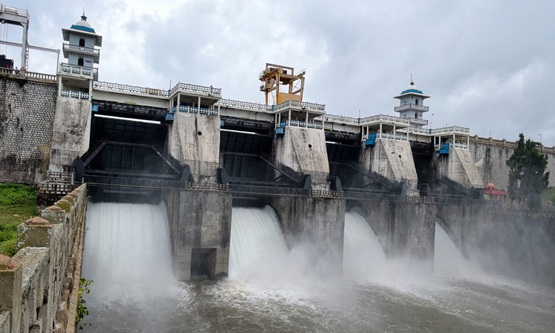
Tamil Nadu moves SC seeking urgent Cauvery water release from Karnataka

The Tamil Nadu government has approached the Supreme Court seeking urgent directions to Karnataka over the release of Cauvery water, citing concerns about the state’s limited water reserves and the impact on agriculture.
In its application, the state has asked the court to direct Karnataka to release water according to the proportions established under earlier Supreme Court orders.
Tamil Nadu said the Mettur reservoir had only a limited quantity of water available and estimated that the remaining supply could support irrigation for roughly another month.
The application refers to a Cauvery Water Management Authority decision dated September 8, 2026, calling for the release of 6,000 cusecs between September 9 and September 23.
Tamil Nadu has also sought compensation, in terms of additional water releases, for the shortfall recorded from July 1 to September 9. The state has sought the release of 16.01 TMC at Billigundulu on a proportional basis.
In its submission, the government said the Cauvery supports irrigation over roughly 25 lakh acres in Tamil Nadu. It also stated that the Kuruvai crop had been adversely affected because Mettur water could not be released in June, while significant areas intended for the Samba crop were similarly unable to receive irrigation.
According to the state, Mettur was eventually opened on September 1, leaving its available reserves sufficient for only about 25 to 30 more days of irrigation.
Tamil Nadu warned that failure to address the accumulated shortfall of more than 16 TMC could further affect agricultural operations and the state’s water requirements.
The state has also argued that non-compliance with directions contained in the Supreme Court’s Cauvery-related orders and those issued by the CWMA could amount to a violation of the court’s decree.
Tamil Nadu further alleged that Karnataka and its officials had not complied with the directions of the Supreme Court and the statutory water-management authority, saying this was affecting farmers dependent on the Cauvery basin.