Revature on a mission to position India as the world’s leading supplier of AI-native engineers

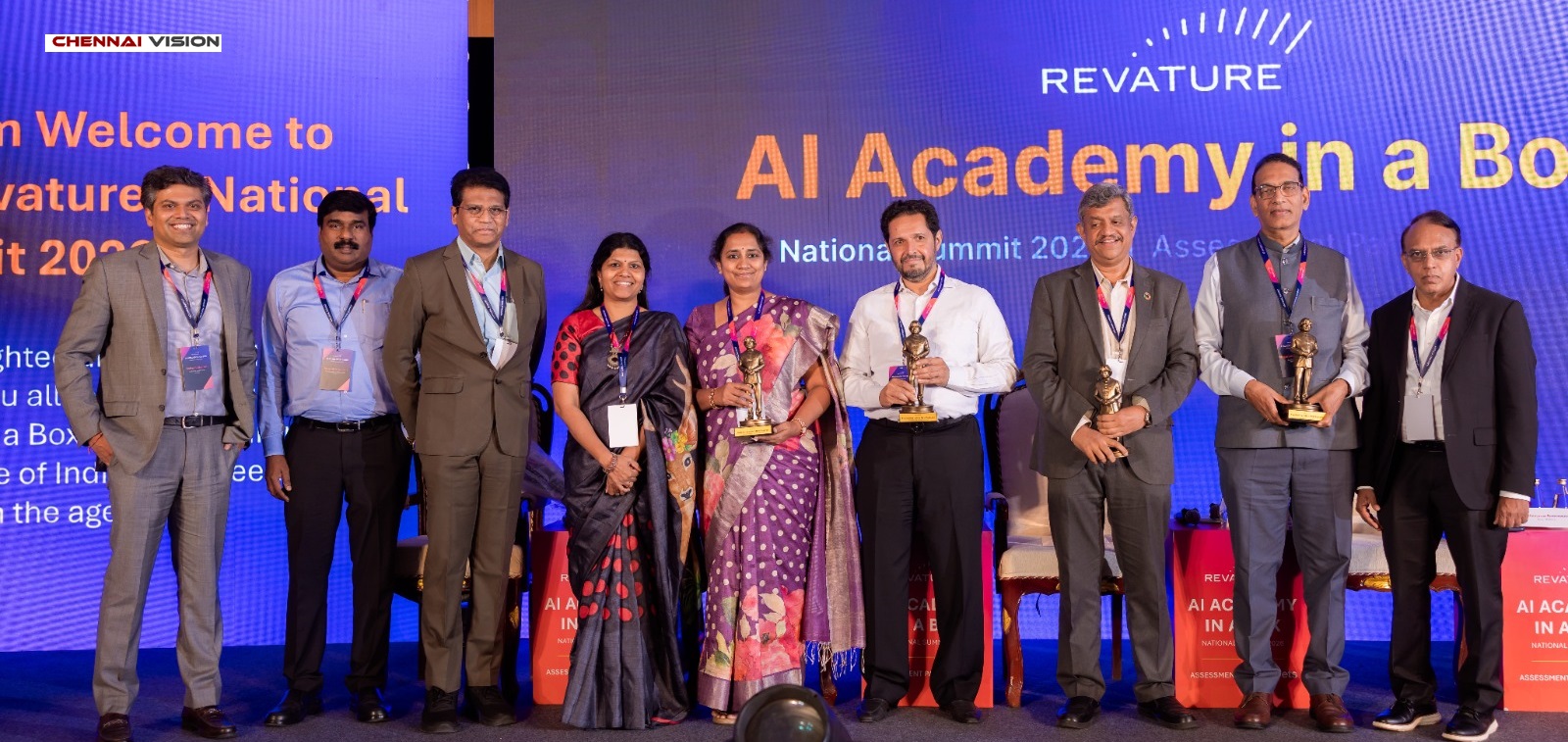
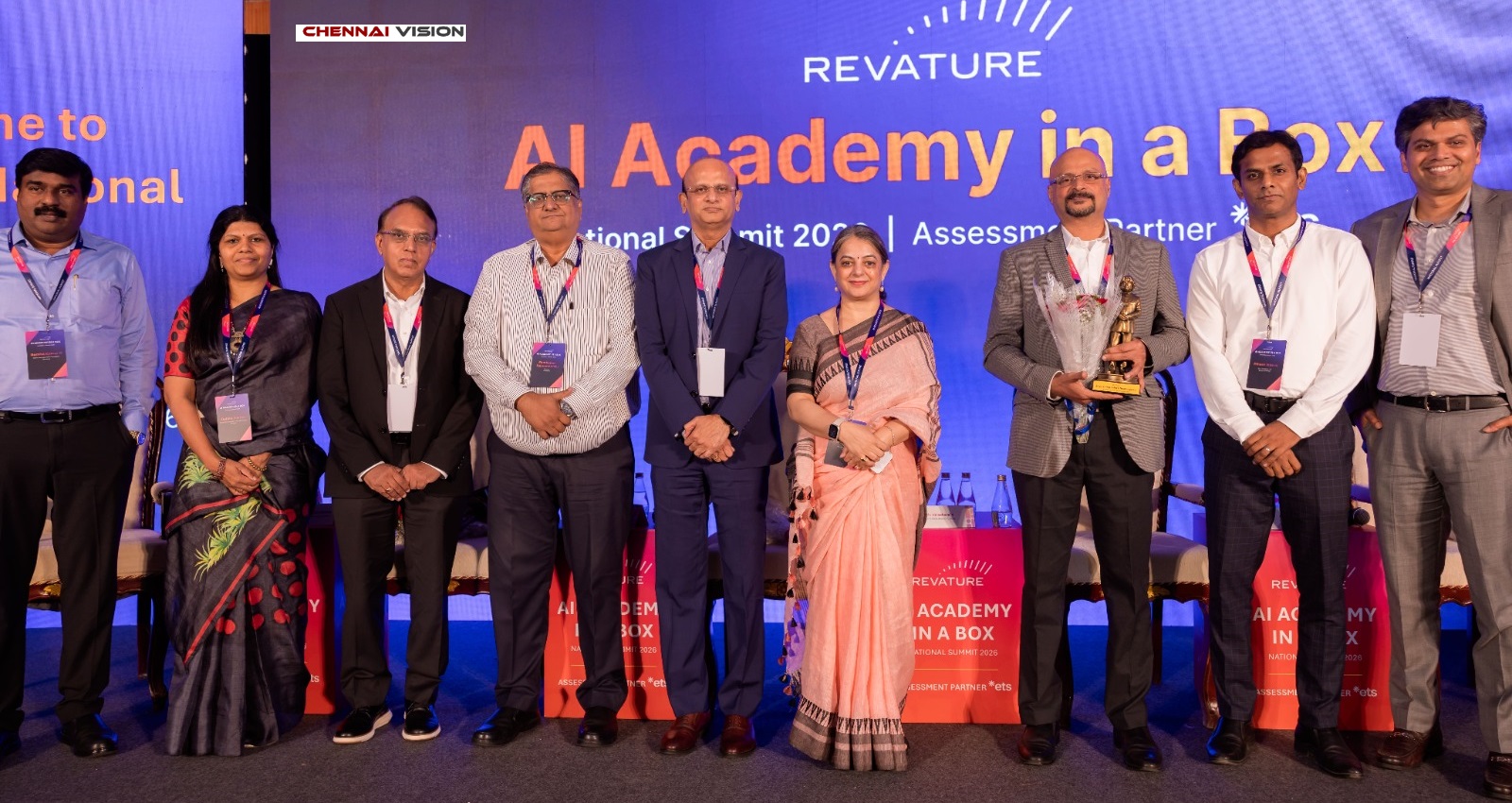
Revature, an AI-Native Talent Transformation Platform, hosted a first-of-its-kind educational summit in the city today. Titled ‘AI Academy In a Box National Summit on the Future of Indian Engineering Education in the Age of AI’, this event saw the participation of leaders from 40 prestigious institutions from across the country, along with ETS, NASSCOM, NIELIT, policymakers, employers and industry veterans.
The room itself carried the weight of that mandate. The employers present have collectively enabled over 10,00,000 technology careers, the academic leaders in attendance graduate more than 15,00,000 and ETS has administered over 50 million assessments worldwide.
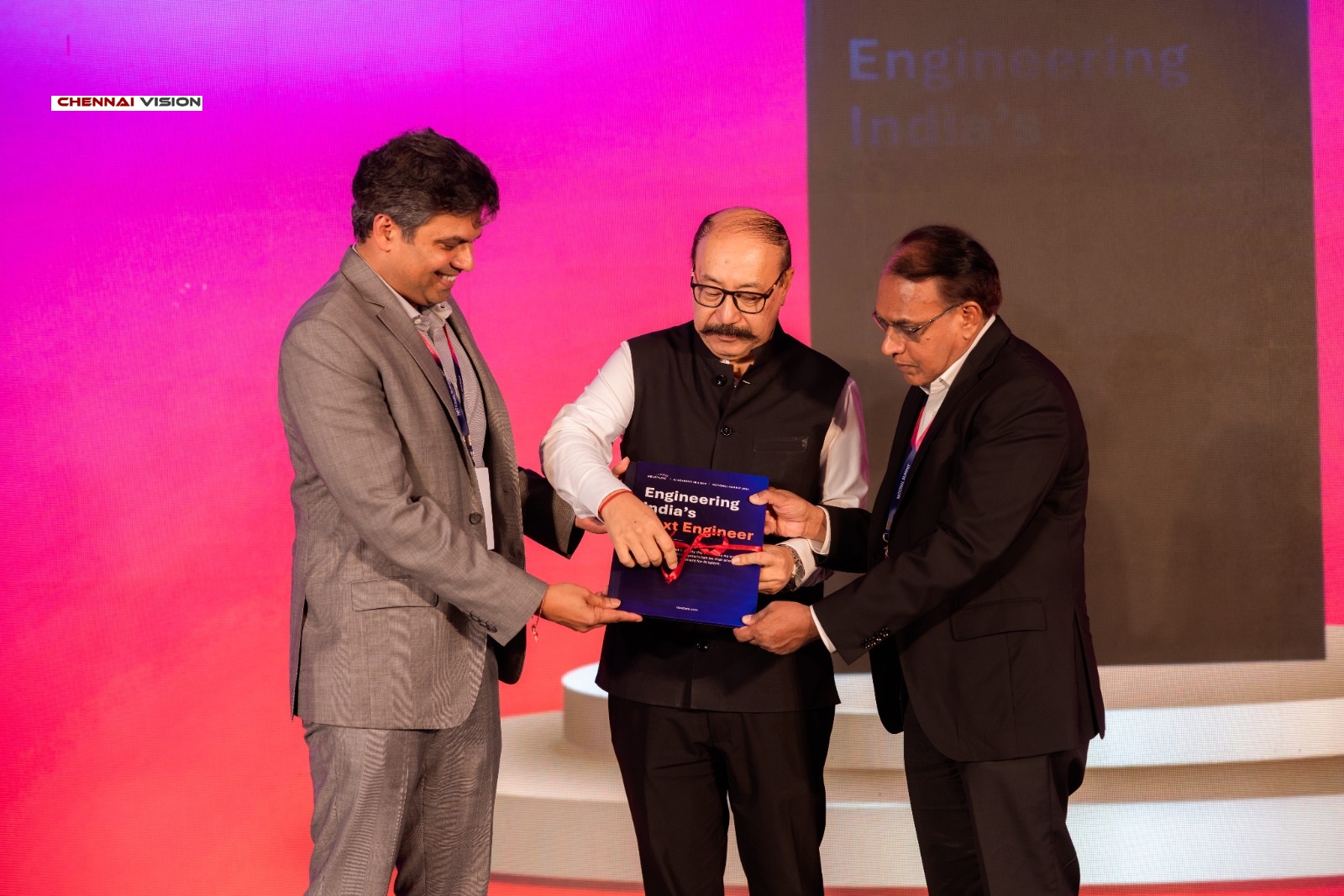
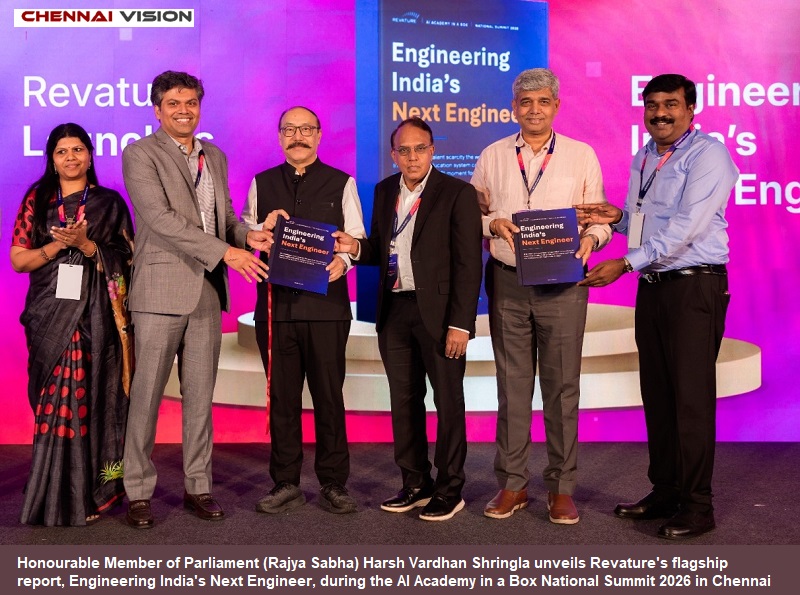
Mr Harsh Vardhan Shringla, Member of Parliament – Rajya Sabha, former Foreign Secretary, Ambassador to the USA and Chief Coordinator for India’s G20 presidency, was the chief guest for the event and he unveiled Revature’s flagship report – Engineering India’s Next Engineer, co-authored by Ashwin Bharath, Co-founder and Chairman, Revature and Tan Moorthy, Chief Executive Officer, Revature.
Mr Shringla praised Revature’s AI Academy in a Box as a working model for institutional transformation and said, “This programme has already been piloted in three Indian universities. A model already exists, and you can use this occasion to begin.”
He called for a nationally coordinated transformation of engineering education – drawing a parallel to India’s landmark payments revolution and said, “We need a UPI moment for AI talent – deliberate, fast and nationally coordinated, exactly as UPI was when the world doubted it could be built at all.”
He called on academic leaders to adopt industry co-designed curricula, portfolio-based assessment, and mandatory co-operative education on the model of Northeastern University – which places 93 per cent of its graduates within nine months.
He told the institutions that they now have the chance to offer curriculum reform, industry co-design, and specialisation at depth — turning today’s disruption into tomorrow’s advantage, rather than tomorrow’s regret. He asked leaders present to ask their students to study with purpose.
“The purpose decides your future, not an outdated syllabus or a hiring model the world has already left behind,” he added.
The flagship report from Revature examines the widening AI skills gap, evolving employer expectations and the strategic interventions required to build a future-ready engineering workforce.
Dr. Madan Mohan Tripathi, Director General and Vice Chancellor of NIELIT (National Institute of Electronics and Information Technology), now India’s first MeitY Deemed University, who was the Guest of Honour, called the present moment a genuine inflection point — one in which AI is no longer confined to research laboratories but is actively transforming healthcare, manufacturing, finance, and governance. He posed the central question of the evening: whether India’s institutions are preparing young Indians fast enough for this change.
Dr. Tripathi highlighted NIELIT’s transformation into a full degree-granting university — the first and only institution under the Ministry of Electronics and Information Technology to attain university status — now offering programmes from diploma through to doctoral level in Artificial Intelligence, VLSI, cyber security, and data science. He also announced the signing of an MoU with the Government of Andhra Pradesh to establish India’s first dedicated Quantum and Artificial Intelligence University campus at Amaravati, bringing Quantum Computing and AI research together under one roof.
On the academia-industry divide, Dr. Tripathi was candid: “No single institution can build the talent pipeline alone. When industry states plainly what competencies it needs and institutions respond with agility, employability stops being an accident and becomes a design.” He affirmed that the AI Academy in a Box model — delivering high-quality, hands-on learning directly to the learner — is precisely the kind of bridge India’s engineering education system needs, and committed NIELIT as a full partner in that mission.
Speaking on the occasion, Ashwin Bharath, Co-founder and Chairman, Revature said, “I have spent twenty years helping young people take their first step into a technology career, and I have never seen that first step as difficult as it is today. This generation is not less capable, it is entering a market that changed faster than the system meant to prepare them. That is not their failure, it is ours to fix. Having built our work around this transition for two decades, I feel a responsibility to be part of the answer, and the answer requires practitioners as faculty, curriculum aligned to what industry needs today, and institutions willing to reimagine how engineers are taught.”
Tan Moorthy, Chief Executive Officer, Revature, added, “India is uniquely positioned to become the world’s largest source of AI-ready engineering talent, but realising that opportunity requires sustained collaboration between academia and industry. AI Academy in a Box brings Revature’s enterprise-proven AI learning capabilities into higher education, enabling institutions to deliver scalable, hands-on and industry-aligned learning experiences. The insights shared during the summit reaffirmed that universities and employers are aligned in their vision of creating graduates who can contribute meaningfully from day one in an AI-powered workplace.
AI Academy in a Box
A comprehensive AI learning ecosystem – AI Academy in a Box – by Revature, was also showcased at the summit. This ecosystem extends its enterprise-grade AI training expertise to colleges and universities, helping them integrate industry-aligned AI curriculum, experiential learning, assessments and hands-on projects into engineering programmes, helping students graduate as AI-ready engineers equipped for the future.
Panel discussions
Two panel discussions on the ‘Impact of AI on Jobs: How Institutes Should Gear Up for the Change’ and ‘How Educational Institutions are Scaling Up for the AI Era’ were held, and some of the pressing questions surrounding AI and engineering education were addressed.
While the first discussion moderated by Ramkumar Ramamoorthy, Partner- Catalincs, explored how Artificial Intelligence is reshaping the workforce, redefining hiring expectations and creating an urgent need for engineering institutions to equip graduates with practical, industry-ready AI skills, the second session, moderated by Narayanan Ramaswamy, Partner – KPMG India highlighted institutional best practices, curriculum innovation, faculty readiness and the importance of industry collaboration in creating AI-enabled campuses.
Participants of the panel discussion for Industry Perspective included Tan Moorthy, Chief Executive Officer, Revature, Varadharaj V, SVP & Global Head of TA, Infosys, Singaravelu Ekambaram, Global Head of Delivery – Americas, Cognizant, Dinesh Jeyaraj, Vice President – Human Resources, Mona Agarwal, Managing Director, Global Capability Center, ETS. And for Institution Perspective Panelist are Dr. Sekar Viswanathan, Vice President, Vellore Institute of Technology, Nagarjuna Sadineni – Pro Vice Chancellor – PES University, Abdul Qadir, Chairman, Crescent University, Abhay Shankar Meganathan, Vice Chairman, Rajalakshmi University and Dr. Sudha Mohanram, Principal and Joint Managing Trustee, Sri Eshwar College of Engineering.
Live audience survey
The summit’s finale was an interactive live audience survey led by Sriram Rajagopal, Founder & Director, Galent. This real-time assessment of AI readiness across India’s engineering education ecosystem captured the audience’s perspective on curriculum transformation, industry-aligned skill development, credentialing frameworks, and institutional preparedness for an AI-driven future. The findings provided valuable insights into the opportunities and challenges facing higher education as it seeks to bridge the gap between academic learning and evolving workforce expectations.
Among the participating institutions were Vellore Institute of Technology, Shiv Nadar University, PES University, GITAM University, Bennett University, Chennai Institute of Technology, Crescent University, Rajalakshmi University, Sri Eshwar College of Engineering, Kumaraguru College of Technology, MLR Institute of Technology, GH Raisoni Institute of Management and Research, and Rajagiri School of Engineering & Technology.