
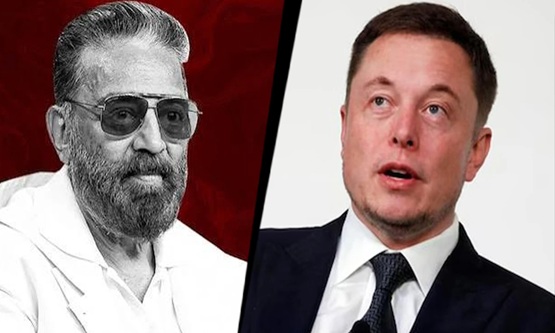
Kamal Haasan challenges Elon Musk over India’s satellite internet debate

Actor and politician Kamal Haasan has pushed back against the idea that wealthy business leaders should influence national policy, weighing in on the debate surrounding Elon Musk’s Starlink and India’s satellite internet market.
The discussion intensified after Musk questioned whether Reliance Industries chairman Mukesh Ambani wielded excessive influence in India. Congress leader Rahul Gandhi also entered the debate, while Haasan used his response on X to argue that policy decisions must remain in the hands of the people and their democratic institutions.
Haasan said India should welcome competition from both domestic and international satellite internet providers, provided they deliver practical, affordable connectivity, particularly to communities in remote areas.
He cautioned that expensive subscriptions and equipment could make satellite internet inaccessible to ordinary households. In his view, expanding connectivity should help close the digital divide rather than create another barrier to access.
The actor-politician also stressed that telecommunications infrastructure and spectrum are strategic national resources. He said security protections must remain a priority regardless of which company provides the service.
Drawing comparisons with American trade policy, Haasan pointed to the United States’ 100% tariffs on Chinese electric vehicles as an example of a government protecting domestic industry. He also referred to restrictions imposed by India and the US on Huawei over security concerns.
His argument was that countries routinely make economic and regulatory choices based on their own interests, making it inconsistent to demand unrestricted competition abroad while maintaining protective policies at home.
Haasan also turned attention to BharatNet, the government’s programme to expand broadband access to village-level local bodies. Citing figures he attributed to the Comptroller and Auditor General’s 2026 audit report, he said only 33.2% of service-ready Gram Panchayats were operational despite expenditure of ₹39,888 crore.
He argued that the programme’s shortcomings deserved scrutiny, while recognising the broader achievements of India’s telecommunications sector in making mobile data comparatively affordable.
The debate brings together questions of market competition, national security, affordability and domestic industrial policy as India considers how satellite connectivity should fit into its digital future.