
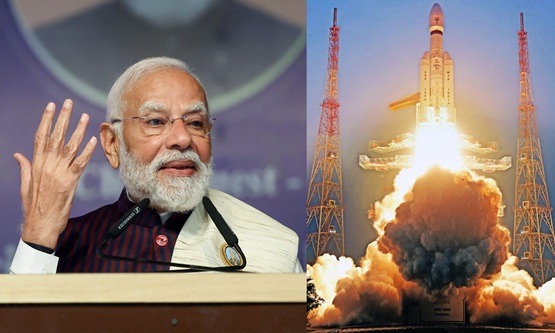
ISRO returns to action with successful GSLV launch, PM hails achievement

The Indian Space Research Organisation has resumed its launch programme with the successful flight of the GSLV-F17, ending a gap of several months following the failure of the PSLV-C62/EOS-N1 mission in January 2026.
The GSLV-F17 lifted off from the Second Launch Pad at the Satish Dhawan Space Centre in Sriharikota at 2:55 am on Friday. About 18 minutes later, the rocket placed EOS-05, also identified as GISAT-1A, into its designated orbit.
Isro chief Dr V. Narayanan described the mission as a major achievement, noting that the GSLV had successfully deployed what he described as its heaviest satellite.
EOS-05 is designed to provide India with a new form of Earth-observation capability. Unlike conventional remote-sensing satellites that travel around the planet in lower orbits and periodically pass over the same locations, the new satellite will operate from a geosynchronous orbit roughly 36,000 km above Earth.
Its position is expected to allow continuous monitoring of a broad geographical area. Such an ability could be particularly useful during rapidly developing situations, including cyclones, floods, forest fires and other natural disasters.
The successful mission also represents an important return to the launch pad for Isro after the January setback.
Prime Minister Narendra Modi congratulated Isro, describing the launch as a significant achievement for India’s space programme. He said the mission demonstrated the country’s growing technological capabilities and highlighted the importance of EOS-05 as an imaging satellite operating from geosynchronous orbit.