
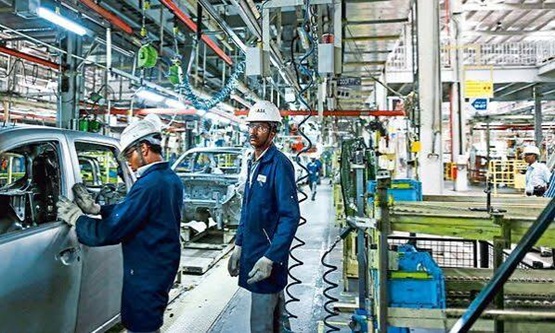
India’s factory growth hits seven-month high as new orders and exports pick up

India’s manufacturing sector recorded its strongest growth in seven months during September, helped by stronger domestic and international demand.
The HSBC India Manufacturing Purchasing Managers’ Index rose to 55.1 in September from 52.8 in August. The latest reading marked a significant improvement in factory activity.
A PMI reading above 50 indicates expansion, while a figure below 50 represents contraction.
According to HSBC Chief India Economist Pranjul Bhandari, the manufacturing sector ended the quarter on a stronger note, with rising sales, production and overseas demand.
Factory hiring also recovered during the month. Employment growth returned after slowing in August, with the pace of job creation reaching its strongest level since May.
Businesses also reported increased purchasing of raw materials and a build-up in inventories as companies prepared for anticipated demand.
Finished-goods inventories recorded their second-largest increase in nearly 12 years, according to the survey.
Sales growth was particularly strong across sectors including electronics, food, pharmaceuticals and textiles. Overall sales growth reached its highest level since February.
Export orders also accelerated, with manufacturers reporting increased demand from markets including Brazil, Europe, the United Arab Emirates and the United States.
Input costs and selling prices both increased at a faster pace during September, although the survey indicated that inflation remained relatively moderate by historical standards.
Manufacturers also became more confident about the months ahead. Business optimism reached a four-month high, supported by new enquiries and expectations of continued demand.
Companies increased production and built inventories in anticipation of stronger sales. Finished-goods stocks rose for the third consecutive month and recorded their second-fastest growth in roughly 11½ years.
The HSBC India Manufacturing PMI is compiled by S&P Global using responses from purchasing managers at around 400 manufacturing companies.