
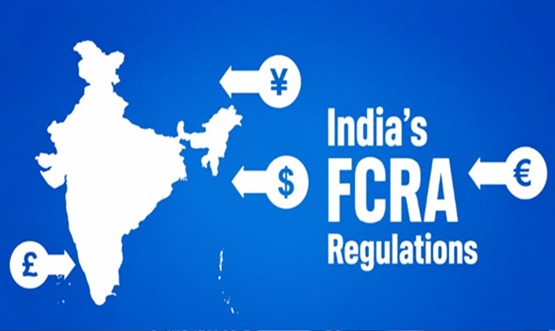
India revises FCRA rules, introduces new compliance requirements

The Union Government has introduced amendments to the rules governing foreign contributions received by organisations under the Foreign Contribution Regulation Act (FCRA).
The revised framework, notified by the Ministry of Home Affairs and effective immediately, changes several procedures related to registration, reporting, and utilisation of foreign funds.
One notable amendment formally defines the term “Chief Executive,” covering individuals responsible for managing organisations such as companies, trusts, societies, firms, and trade unions. References to governing body members in several provisions have been replaced with this designation.
Under the new rules, organisations seeking FCRA registration must clearly specify the purpose of their activities and the state or Union Territory in which they intend to operate. Existing registered entities must provide these details within one year if they wish to continue their registration.
The government has also introduced a schedule categorising eligible activities under five sectors: religious, cultural, economic, educational, and social. Applicants must select the relevant categories when applying.
Additional fees will apply for organisations seeking approval for multiple purposes or operations across multiple states and Union Territories.
The amendments also state that organisations led by foreign nationals in key positions will generally not qualify for registration or prior permission unless specifically permitted by the government.
Foreign contributions may only be used within India and solely for approved purposes. Organisations receiving funds in stages must demonstrate substantial utilisation of earlier instalments before subsequent releases are approved.
Another provision establishes a benchmark for determining whether an organisation has been actively functioning. To be considered as carrying out reasonable activity, an association must have spent at least ₹10 lakh in foreign contributions on approved purposes during the previous two financial years.