
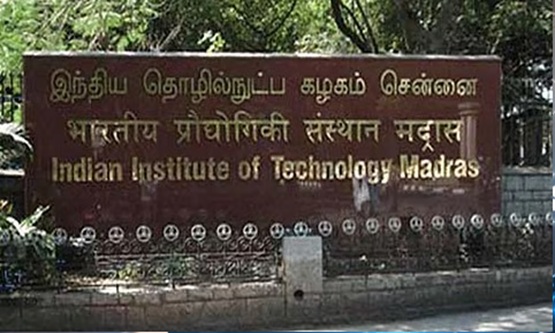
IIT Madras proposes frugal AI roadmap for India, shifts focus from expensive models

India should chart an independent course in artificial intelligence by developing smaller, specialised and cost-effective systems instead of attempting to match the enormous investments being made in advanced AI models by global technology powers, according to a new white paper released by IIT Madras.
Titled ‘A Frugal AI Framework for India’, the report advocates an approach called Responsible Frugal AI, which focuses on delivering practical benefits while reducing computing requirements, energy consumption and financial expenditure.
Released by IIT Madras Director V Kamakoti at the Industry Conclave on AI Governance 2026, the framework argues that AI development should be guided by actual societal and institutional needs rather than the pursuit of increasingly large models. Kamakoti emphasised that an AI system need not possess extensive knowledge to be useful, provided it can perform its intended task effectively and reliably.
The paper has been prepared by researchers from the Centre for Responsible AI (CeRAI), Wadhwani School of Data Science and AI, and the Department of Engineering Design. CeRAI and Wadhwani School head Balaraman Ravindran said India’s engineering capabilities, innovation ecosystem and digital public infrastructure offered a strong foundation for an alternative AI strategy. CeRAI Research Director Gokul S Krishnan stressed that institutions must first establish whether AI is necessary before selecting the technology. In many cases, simpler solutions such as rule-based systems, retrieval-based tools and conventional machine learning could prove sufficient.
The framework also recommends shared computing infrastructure, modular and interoperable technologies, and multilingual AI applications suited to India’s diverse population. It calls for selective use of generative AI and evaluation based on real-world performance, resource efficiency, accountability and social impact rather than benchmark scores alone.
A seven-point checklist proposed in the report covers the justification for adopting AI, defining operational requirements, selecting appropriate models, conducting practical testing, monitoring lifecycle costs and ensuring documentation, independent audits and human supervision. It also advocates publishing deployment failures and maintaining manual alternatives wherever necessary. The central message is that India’s AI ambitions need not depend on expensive technological competition; a focused, affordable and responsible approach could deliver wider benefits across public services, industry and society.