
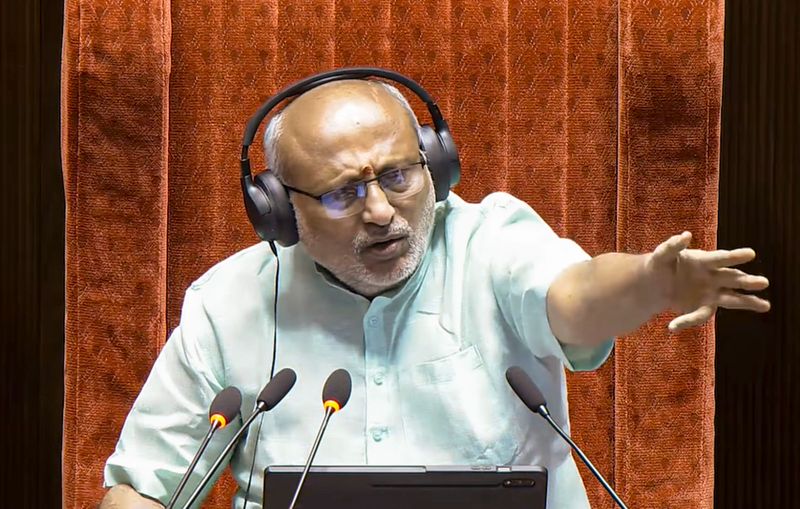
Discussion under Rule 267 only on subjects already listed on day’s agenda: Rajya Sabha Chairman C.P. Radhakrishnan

Rajya Sabha Chairman CP Radhakrishnan on Thursday issued a sharp clarification on the ambit of Rule 267, stressing that it cannot be used as a daily tool to sidestep the Upper House’s listed business.
He said the House was witnessing “near-routine” attempts to invoke a provision meant strictly for exceptional situations, and that this widening misuse needed firm correction.
For several sessions, Opposition MPs have repeatedly filed Rule 267 notices to suspend scheduled business and force debates on issues they deem urgent.
None of these notices has been accepted in more than two decades. Their frequency has surged in recent years, with the Opposition alleging that the BJP-led government systematically avoids even short-duration discussions.
Throughout the ongoing winter session, multiple notices were submitted — all rejected by the Chair. On Wednesday, Radhakrishnan dismissed two more, observing that the rule was increasingly being invoked mechanically and without regard for its limited scope.
He reiterated that Rule 267 couldn’t be equated with an adjournment motion in the Lok Sabha, which had explicit constitutional backing under Article 75(3). The Rajya Sabha had no such authorisation, he noted.
A valid Rule 267 notice must relate to an item already listed for the day, specify the precise rule to be suspended and present clear grounds for doing so. Attempts to introduce unrelated subjects, he said, were “invalid”.
Radhakrishnan also traced the evolution of the rule to the May 2000 amendment recommended by a committee headed by former Chairman Krishan Kant, and including leaders such as Manmohan Singh, Pranab Mukherjee and Fali Nariman.
The panel had cautioned against frequent attempts to raise unlisted matters and advised restricting the tool solely to listed business.