AI Edtech Dialogue Hosted by Reliance Foundation and Central Square Foundation Recommends Urgent Need to Reimagine Education in the AI Era
• Key recommendations synthesized to inform national and global conversations at the India AI Impact Summit 2026
• Insights shared from the LiftEd EdTech Accelerator, which has reached over 3 million children
• Leaders from philanthropy, EdTech, academia and the private sector examined how AI- enabled education can deliver equitable, measurable learning gains at scale and emphasised the need for cross-sector collaboration across the ecosystem to achieve this.
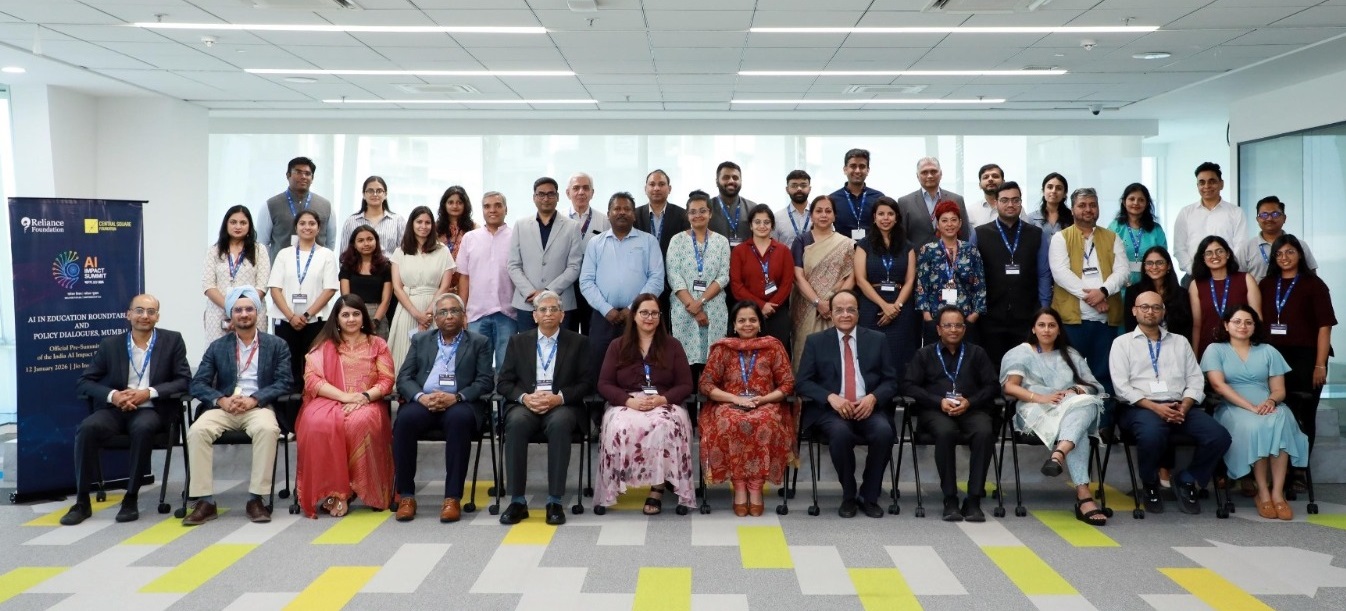
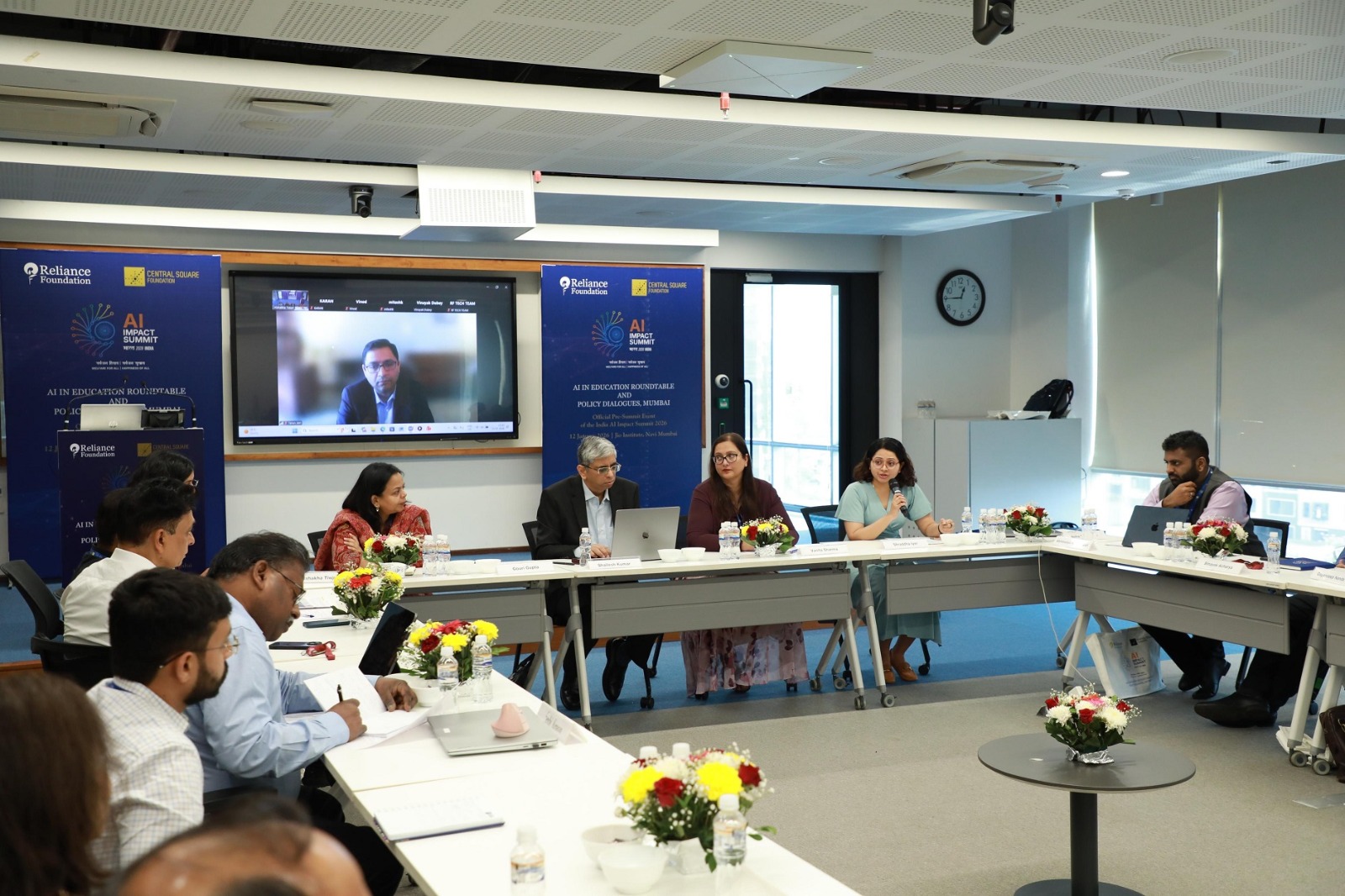
As an official pre-summit event of the India AI Impact Summit 2026, Reliance Foundation, in partnership with Central Square Foundation, convened a high-level roundtable on AI in Education at Jio Institute, Navi Mumbai. The half-day convening brought together over 50 leaders and experts from philanthropic organisations, EdTech, academia and the private sector to examine how Artificial Intelligence (AI) and EdTech can be harnessed to improve learning outcomes and rethink education in the age of AI.
The convening concluded with a synthesis of strategic insights to inform ongoing national and global conversations at the India AI Impact Summit 2026. Participants reiterated the importance of sustained collaboration between governments, private sector, innovators, researchers, and funders to ensure that AI- enabled EdTech strengthens education systems at scale rather than creating standalone tools. At a moment when AI is reshaping education systems globally, the dialogue also focused not only on innovation, but on the harder question of impact: how promising AI-enabled solutions can move beyond pilots to deliver meaningful, inclusive, and scalable learning gains in low-resource, multilingual contexts.
Grounding the Global Conversation: Innovation with Purpose
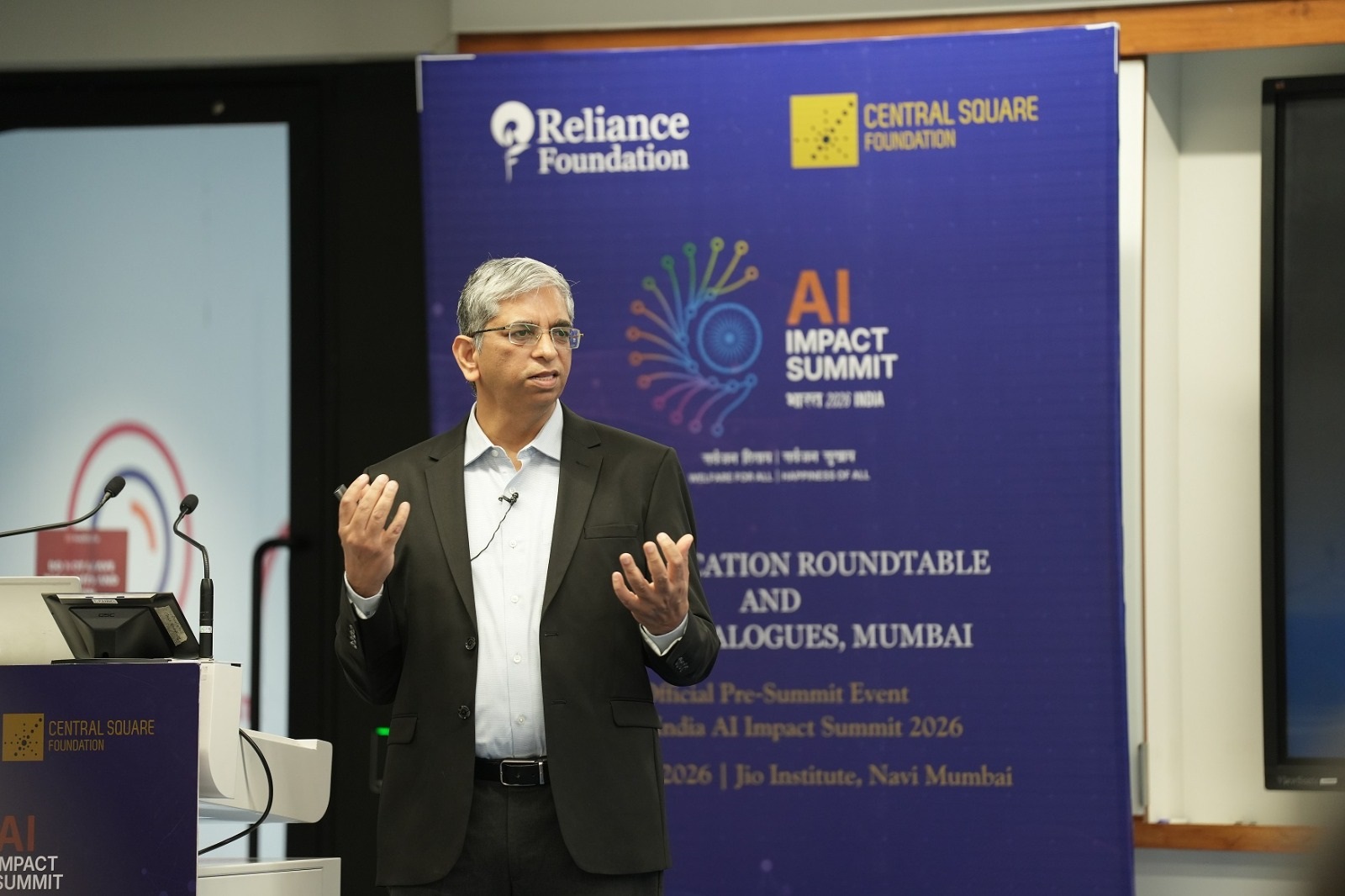
The discussions echoed global priorities rooted in local realities: aligning AI with learning science, safeguarding equity and inclusion, and measuring scale through learning outcomes rather than reach alone. Participants noted that better technology does not automatically translate into better learning. The keynote address by Dr. Shailesh Kumar, Chief Data Scientist, Jio and Dean, Jio Institute, reflected on global debates around Education 4.0 and the need to fundamentally reimagine education systems for a digital- and AI-first world. Dr Shailesh Kumar said: “It is time to re-imagine our Education System – what should it look like if it was born today – in the post connectivity and AI era? It is time to bring Personalised Education to every child on the planet.” He also emphasised moving away from one-size-fits-all, “just-in-case” education models towards personalised and student-centric learning systems that focus on building mastery learning and thinking skills with contextualised pedagogy, enabled by AI at scale.
Experts discussed the innovation landscape for AI-enabled learning, highlighting emerging use cases across personalised instruction, teacher support, assessment, and home-based learning especially for early childhood education and foundational literacy and numeracy. They also explored what it takes to scale— addressing institutional adoption, cost structures, multilingual content, data infrastructure, and the realities of deploying AI within government systems and community-based learning ecosystems. Philanthropy as a Catalyst for Systemic Change
A central thread across the convening was the critical role of philanthropy in shaping the next phase of AI and EdTech in India. Participants emphasised that philanthropy’s value lies not only in funding innovation, but in de-risking early ideas, enabling long-term evidence generation, strengthening organisational capacity, and convening diverse actors around shared priorities. Insights were shared from the LiftEd EdTech Accelerator, a multi-year philanthropic initiative that has reached over 3 million children, particularly in underserved school and home-learning contexts. Supported by founding partners Michael and Susan Dell Foundation, Reliance Foundation and UBS Optimus Foundation, and led by Central Square Foundation and British Asian Trust, the initiative demonstrated how sustained support can help organisations responsibly integrate AI and build credible evidence of learning impact.
“Building AI and EdTech for impact is not just about the technology itself – it is about understanding the ground realities of implementing it in classrooms, homes, and communities. Learnings from the LiftEd EdTech Accelerator show how contextualised design and evidence-led approaches can support quality learning at scale,” said Dr. Vanita Sharma, Advisor – Strategic Initiatives, Reliance Foundation.
From Innovation to System-Wide Scale
The discussion highlighted that scaling effective AI-enabled learning solutions is a systems challenge— requiring alignment across policy, pedagogy, delivery models, research, and ecosystem partnerships. Participants stressed the need to design for India’s diversity, including multilingual content, offline or low- bandwidth access, shared-device use, and alignment with state curricula. “The next frontier for EdTech is not just innovation, but scaling proven, contextualised solutions through government systems and community adoption to drive learning outcomes at scale,” said Gouri Gupta, Senior Project Director, EdTech, Central Square Foundation (CSF), setting the stage for recommendations to be carried forward to the national summit.
From Dialogue to Action
The event reinforced a shared commitment: AI and EdTech must serve as a force multiplier for equity, not efficiency alone. Participants also underscored that teachers and parents remain central to learning, with AI acting as a supportive enabler through personalisation, feedback, and data-driven insights.
As India positions itself as a global leader in AI for social impact, such cross-sector dialogues play a vital role in shaping pathways from innovation to evidence, and from evidence to system-wide adoption. The insights from this round table will contribute to shaping the education agenda at the India AI Impact Summit 2026.